4–6
Play, sound and story
Short activities, pictures, movement, objects, songs, simple books and repeated spoken Greek. Early literacy is introduced gently when the child is ready.
Age-appropriate Greek teaching that helps children speak, understand, read and connect the language to family and heritage.
A child can know that they are Greek and still find it difficult to speak Greek spontaneously. They may understand grandparents but reply in English, know familiar expressions but lack confidence, or speak well yet struggle to read and write. Greek.school is designed around those real starting points.
We teach children from age four upwards. The lesson is adjusted to age, attention, confidence and existing Greek. A four-year-old needs movement, pictures, play and short cycles of activity. An older child can sustain longer conversation, read more substantial texts and begin to discuss history, mythology, places and ideas in greater depth.
Our lessons are built around hearing good Greek and then doing something with it: answering, choosing, predicting, remembering, retelling, reading aloud, describing a picture, locating a place on a map or explaining a story to a parent. Correction is calm and proportionate. Weak Greek, an English accent or mixed Greek-English speech is treated as a starting point, not a reason for embarrassment.
Short activities, pictures, movement, objects, songs, simple books and repeated spoken Greek. Early literacy is introduced gently when the child is ready.
More sustained speaking, shared reading, phonics and writing alongside stories, maps, mythology, food and family themes.
Longer texts, more precise vocabulary, discussion, writing and deeper cultural material, while continuing to build confident spoken Greek.
The standard visit lasts seventy-five minutes. It normally includes a Greek greeting and retrieval from the previous lesson, reading or phonics at the child’s level, a core story or heritage theme, an active cultural task, short personalised practice for the week and a parent handover.
For younger children the direct activities change frequently, so the visit never becomes a long desk-based lesson. Parents remain part of the process through a simple home task, often involving a meal, a journey, a family story or a conversation with a grandparent.
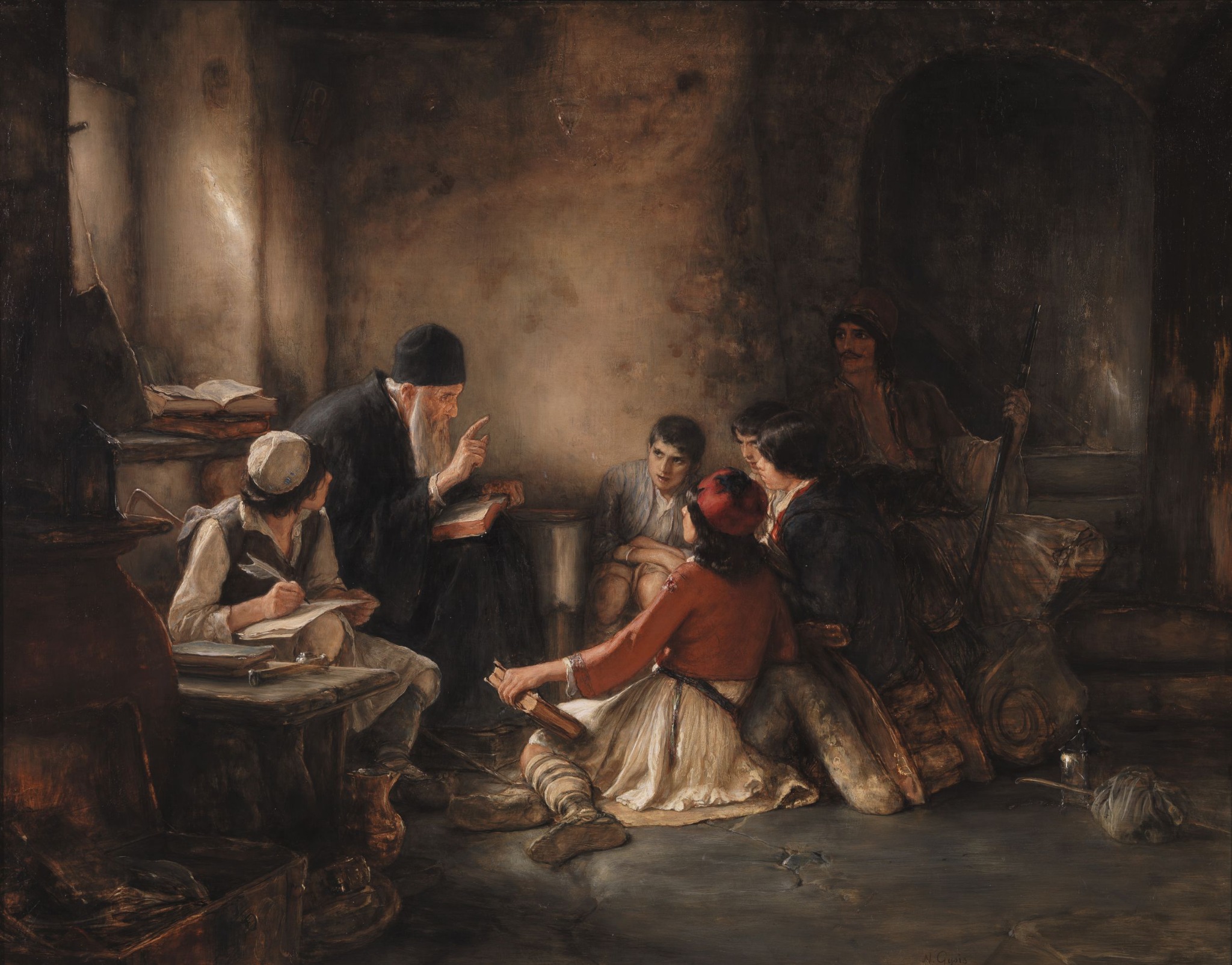
Stories allow language, memory and heritage to reinforce each other. A lesson might begin with a Greek book, move to a map of an island, introduce five useful words, ask the child to retell what happened and finish with a small task to show a parent or grandparent.
History, mythology, food, music, places and family life are not extras added after the language lesson. They provide reasons for the language to be used.